Enterprise Quality Management and Operations Platform: Qualtaris

A digital quality management platform built to centralize projects, requirements, risks, actions, audits, compliance workflows, dashboards, and operational governance.

Talk to the Team
Deliverables
SaaS Platform Development
Industry
Quality Management
Duration
6 - 8 Months
Country
UK
Enterprise Quality Management and Operations Platform: Qualtaris
Overview

Business Goals & Project Overview

Business Goals

The client needed a centralized digital quality management platform to replace manual processes, scattered documentation, disconnected project tracking, and limited operational visibility. The objective was to help teams manage projects, requirements, risks, actions, compliance activities, stage gates, reports, and governance workflows through one structured system.

Project Overview

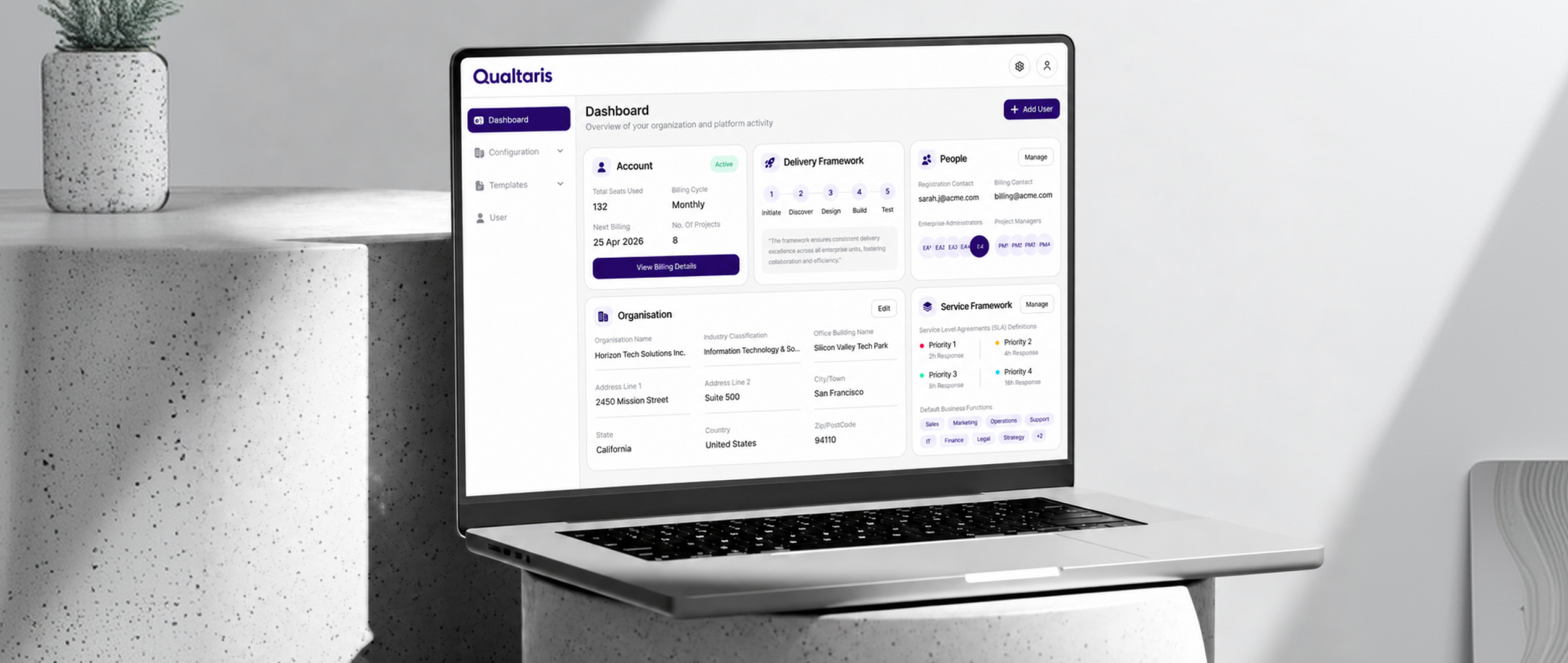
The platform is an enterprise quality management and operations solution designed for organizations that need better control over quality processes, compliance workflows, documentation, operational tasks, and reporting. It brings together project management, programme oversight, requirements tracking, risk and issue management, action tracking, ATP and stage-gate workflows, dashboards, alerts, reports, document collaboration, and compliance visibility. It helps teams reduce manual coordination, improve audit readiness, track accountability, and make faster decisions using structured data and real-time dashboards.

Proven Results

One Platform for Complete Quality & Operational Control

eQMO connects projects, requirements, risks, actions, compliance, stage gates, reporting, and governance workflows to help teams replace fragmented processes with structured, real-time operational management.

70% Reduction in manual administration effort
50%Faster management review
78%Improved cross-project visibility
80% Stronger audit traceability
Challenges & Solutions

Challenges Faced and Conquered

From fragmented workflows to limited visibility, the platform addresses key operational challenges with structured digital workflows and centralized management.

The Challenge

Fragmented Quality and Operational Processes

Teams were managing quality activities, project updates, risks, actions, requirements, and reports across scattered tools, spreadsheets, emails, and manual workflows.

Our Solution

WebMob Technologies developed a centralized platform where users can manage projects, requirements, risks, actions, tasks, reports, dashboards, and compliance workflows from one connected system.

The Challenge

Limited Visibility Across Projects and Programmes

Management teams lacked real-time visibility into project health, programme-level progress, open actions, risks, delays, and performance indicators.

Our Solution

The platform provides dashboards, KPI views, reports, and project/programme summaries to help teams monitor progress, identify bottlenecks, and make informed decisions.

The Challenge

Manual Risk, Issue, and Action Tracking

Risks, issues, corrective actions, and follow-ups were difficult to track consistently, making ownership, escalation, and closure harder to manage.

Our Solution

The platform supports requirement-risk-issue-action tracking, ownership assignment, status updates, alerts, escalations, and closure workflows to improve accountability.

The Challenge

Complex Approval and Stage-Gate Workflows

The client needed structured workflows for approvals, stage gates, ATP processes, and project closure activities without relying on offline approvals.

Our Solution

The platform enables request, review, response, approval, and closure workflows, helping teams manage governance steps in a more traceable and controlled way.

Features Implemented

Key Features & Functionality

  • Key Features & Functionality
  • Key Features & Functionality
  • Key Features & Functionality
  1. Dashboard and KPI Monitoring

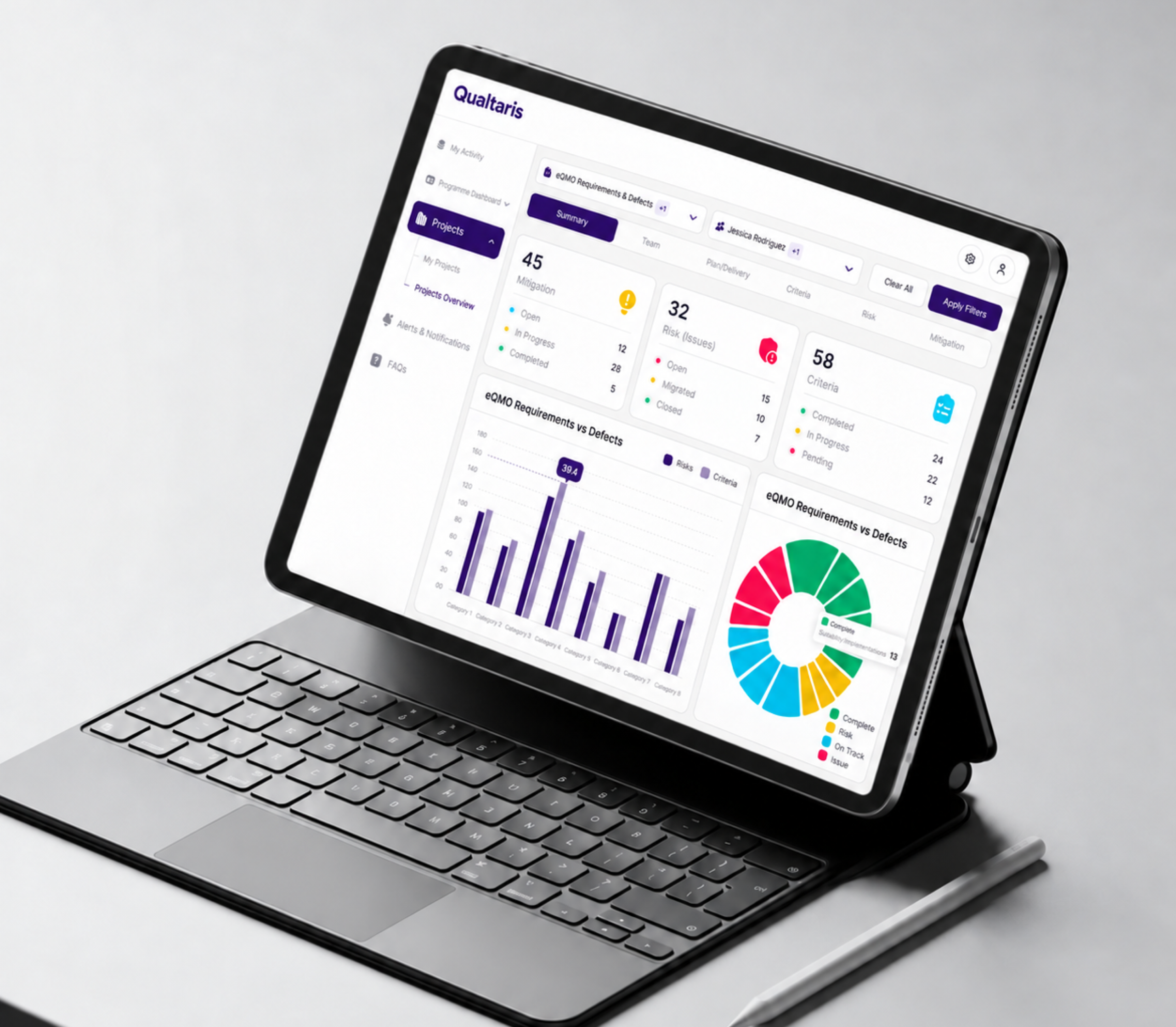
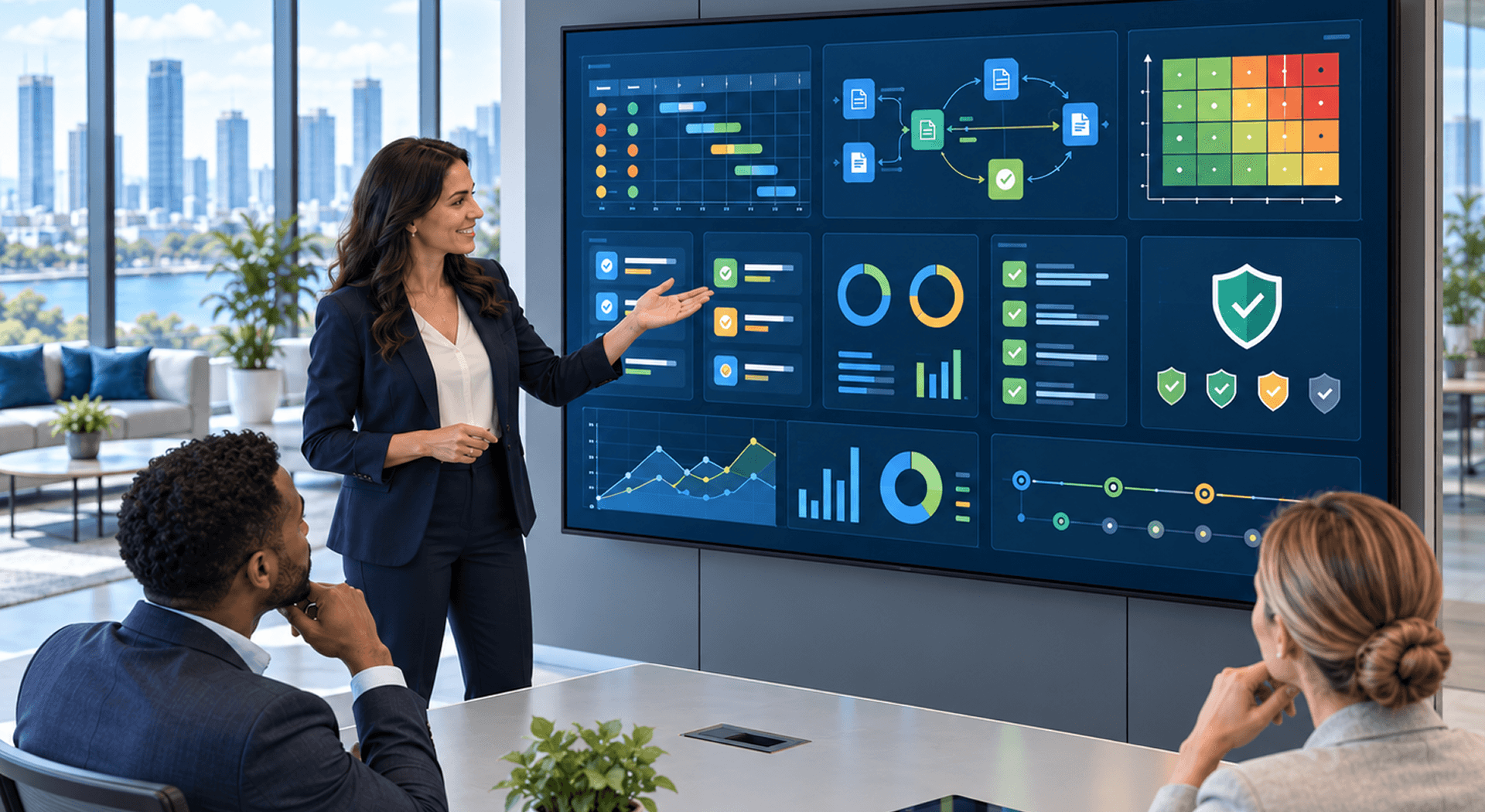
    Role-based dashboards help users track project health, open actions, risks, issues, compliance progress, and overall performance indicators.

  2. Project and Programme Management

    Users can create, manage, assign, monitor, and close projects while programme-level views help leadership track progress across multiple initiatives.

  3. Requirements Management

    The platform supports requirement capture, tracking, structuring, and linking with related risks, actions, issues, and project activities.

  4. Risk, Issue, and Action Management

    Teams can record risks, assign owners, track issues, define actions, monitor status, and close items through a structured workflow.

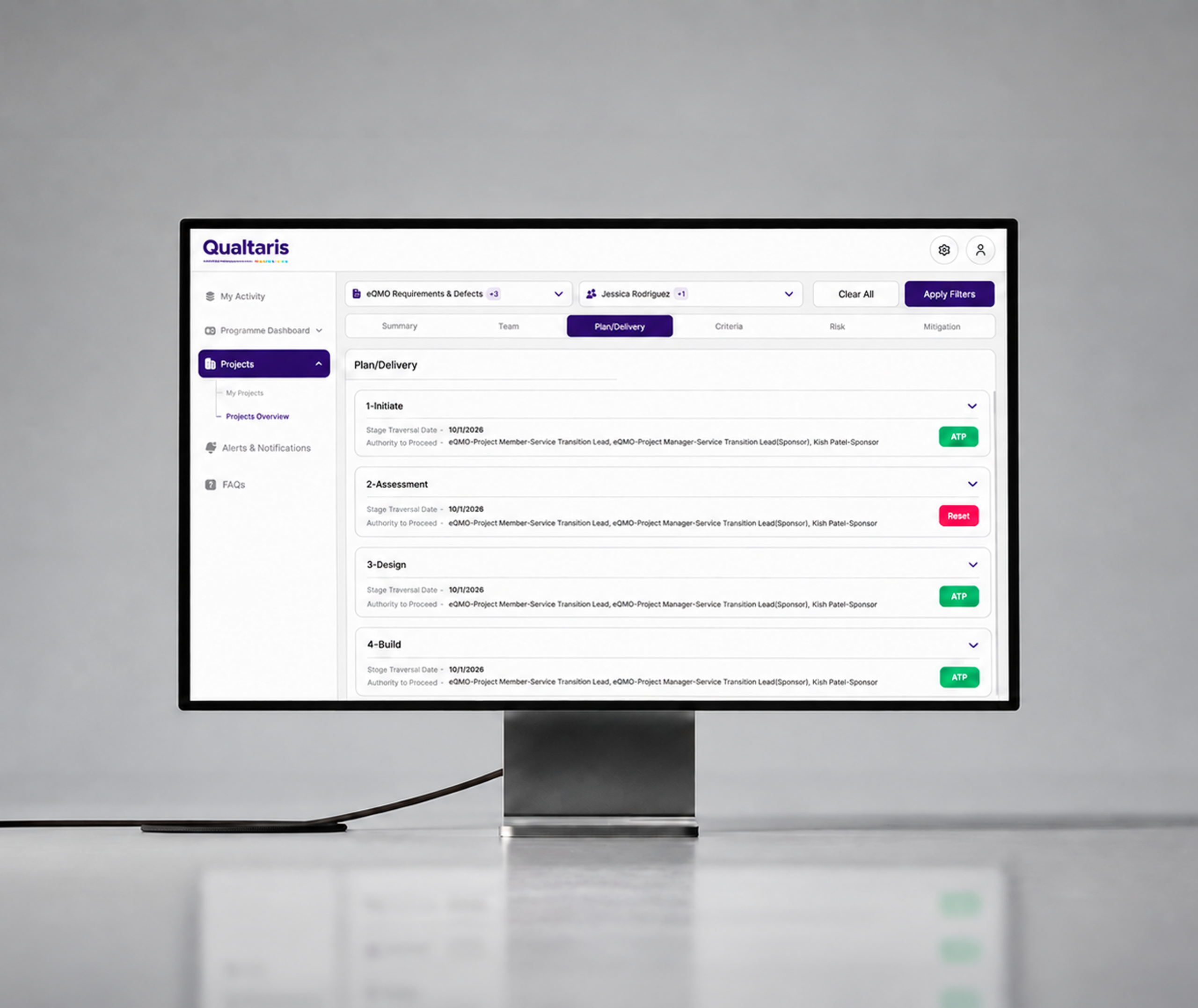
  5. ATP and Stage-Gate Workflows

    The system supports request-response-approval flows, stage-gate governance, and structured project progression.

  6. Task Management

    Users can create, assign, prioritize, track, and complete tasks with better visibility into ownership and deadlines.

  7. Alerts and Notifications

    Configurable notifications help users stay updated on pending actions, approvals, task deadlines, risks, and important workflow events.

  8. Reports and Analytics

    The platform provides reporting and analytics to support management reviews, audit preparation, project performance tracking, and operational decision-making.

  9. Document Templates and Collaboration

    Structured templates, document collaboration, comments, version history, and controlled access help teams manage quality documentation more efficiently.

  10. Asset and Compliance Management

    The platform supports asset tracking and compliance management to improve operational control and reduce manual dependency.

Our Tech Stack

The Right Tools for Every Challenge

A scalable SaaS architecture built with centralized data, workflow automation, role-based access, reporting, and secure cloud infrastructure.

React
HTML5
CSS3
The Result

Results That Strengthen Management Operations

The Enterprise Quality Management and Operations Platform successfully brought projects, programmes, requirements, risks, issues, actions, tasks, compliance activities, stage gates, ATP processes, reports, dashboards, documentation, and governance workflows into one centralized system.

  • Centralized Quality Management

    Before
    Quality activities, project updates, documentation, and operational processes were managed across scattered tools, spreadsheets, emails, and manual workflows
    After
    A centralized platform brings projects, requirements, risks, actions, tasks, reports, dashboards, and compliance workflows into one connected system
  • Project & Programme Management

    Before
    Management teams had limited visibility into project health, programme progress, open actions, risks, delays, and performance indicators
    After
    Users can manage projects and access programme-level views, dashboards, KPIs, and project summaries to monitor progress and performance
  • Requirements, Risk & Issue Management

    Before
    Requirements, risks, issues, corrective actions, and follow-ups were difficult to track consistently
    After
    Requirements can be linked with risks, issues, and actions, while owners, statuses, alerts, escalations, and closure workflows provide structured tracking
  • ATP & Stage-Gate Workflows

    Before
    Approvals, stage gates, ATP processes, and project closure activities relied on offline approvals and manual coordination
    After
    Request, review, response, approval, and closure workflows provide structured and traceable governance
  • Dashboards, Reports & Analytics

    Before
    Limited operational visibility made management reviews and decision-making more difficult
    After
    Dashboards, KPI tracking, project/programme reports, closure summaries, and analytics provide structured visibility for management and operational decisions
  • Document & Compliance Management

    Before
    Documentation, compliance activities, and audit preparation involved manual processes and scattered information
    After
    Structured templates, comments, version history, controlled access, asset tracking, and compliance management support documentation, collaboration, and audit readiness
From Discovery to Production

A Structured Path From Idea to Launch

  1. Discovery & Strategy

    Understood the business goals, user needs, existing workflows, and technical requirements.

    Discovery & Strategy
  2. Solution Architecture

    Defined the system architecture, technology stack, integrations, and data flow required for the solution.

    Solution Architecture
  3. Development & Integration

    Built the core platform in agile sprints, integrating APIs, backend services, frontend experiences.

    Development & Integration
  4. Testing & Optimization

    Validated functionality, performance, security, and usability before preparing the solution for production.

    Testing & Optimization
  5. Deployment & Rollout

    Launched the solution, monitored performance, resolved initial issues, and ensured a smooth transition to production.

    Deployment & Rollout
Use Cases

Benefits of a Unified Quality Management Platform

Improve operational control, audit readiness, decision-making, accountability, governance, and efficiency through connected quality management.

  • Centralized Property & Device Operations

    The platform brings projects, requirements, risks, issues, actions, documents, reports, and compliance workflows into one system.

  • Improved Audit Readiness

    Structured records, version history, approval workflows, reports, and traceable actions help teams prepare better for audits and reviews.

  • Faster Decision-Making

    Dashboards and reports give leadership better visibility into project health, programme progress, risk status, and pending actions.

  • Reduced Manual Coordination

    Automated alerts, assignments, workflows, and status tracking reduce dependency on emails, spreadsheets, and manual follow-ups.

Conclusion

This enterprise quality management and operations platform helps organizations control quality workflows, manage projects, track requirements, monitor risks, close actions, and improve audit readiness. With centralized dashboards, role-based access, structured workflows, document collaboration, alerts, and reporting, the platform gives teams the visibility and governance needed to manage complex quality operations more effectively.

We've a lot more to showcase here, around 700+ projects.

FAQs

Frequently Asked Questions

Questions About Building Quality Management Platform

Your Success, Our Commitment

Empowering businesses with innovative technology, uncompromising quality, and customer-first solutions.

Pramesh Jain

Founder & CEO

An enterprise quality management platform is a centralized system that helps organizations manage projects, requirements, risks, issues, actions, approvals, reports, and compliance workflows in one place.

It reduces manual tracking by digitizing workflows, assigning ownership, sending alerts, maintaining records, and giving teams real-time visibility into project and quality-related activities.

Yes. The platform maintains structured records, approval history, version history, risk logs, action tracking, and reports, making it easier for teams to prepare for internal or external audits.

Users can create risks, issues, and actions, assign responsible owners, set priorities, track status, monitor closure, and maintain a clear history of updates and decisions.

The platform can be used by quality teams, project managers, compliance teams, operations teams, leadership users, and administrators who need better control over quality and governance workflows.

It improves operational visibility, reduces spreadsheet dependency, speeds up decision-making, strengthens accountability, and helps teams manage quality processes with better structure and traceability.