Smart Water & IoT Property Management Platform: HydroPulse

IoT-powered water management and property monitoring for smarter, more connected environments.

Talk to the Team
Deliverables
Mobile Application
Industry
IoT
Duration
6 months
Country
USA
Smart Water & IoT Property Management Platform: HydroPulse
Overview

Business Goals & Project Overview

Business Goals

To build a scalable IoT-powered platform that centralizes property management, water intelligence, device monitoring, alerts, and operational workflows. The solution aims to streamline device lifecycle management, enable real-time monitoring and smart valve control, simplify installations, and provide secure role-based access for administrators, technicians, property teams, and residents.

Project Overview

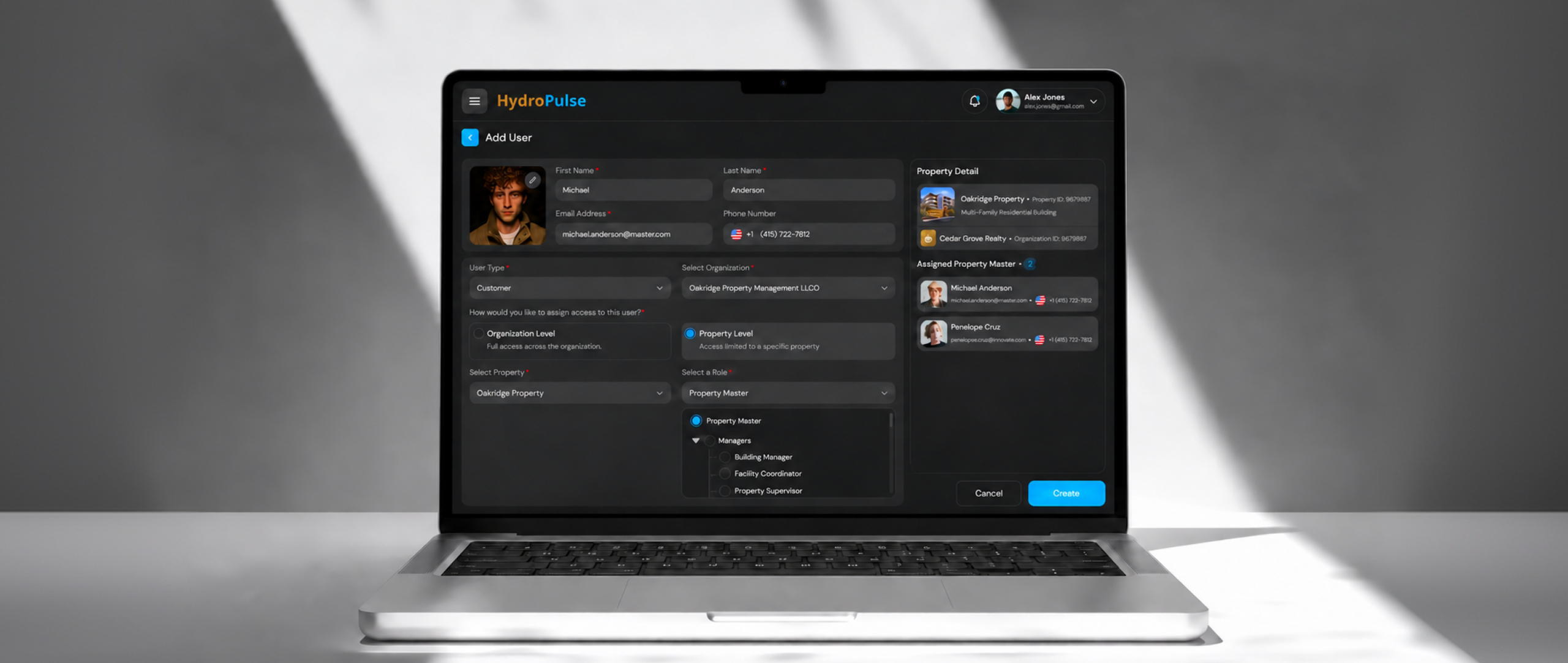
HydroPulse is a comprehensive IoT-powered water and property management platform designed for residential and commercial environments. The solution brings organizations, properties, layouts, fixtures, connected devices, alerts, users, and operational workflows into one unified web and mobile ecosystem. It supports smart valves, leak sensors, toilet sensors, water meters, gateways, and other IoT devices while enabling real-time monitoring, alert management, smart valve control, inventory tracking, and maintenance operations. A flexible property hierarchy allows different buildings and locations to be structured accurately, while role-based access ensures users only see authorized data. The platform also provides residents and technicians with mobile tools for monitoring, installation, alerts, device history, and control.

Proven Results

HydroPulse Advantage: Smarter Property & Water Management

HydroPulse brings property management, IoT device monitoring, water intelligence, alerts, smart valve control, and operational workflows into one unified web and mobile ecosystem.

90%+Faster property setup
80%+Reduced manual tracking
24/7 Device and alert visibility
4xFaster layout duplication
Challenges & Solutions

Challenges Faced and Conquered

The client needed a scalable IoT platform capable of managing complex property structures, real-time device data, granular user access, complete device lifecycles, intelligent alerts, repetitive property configurations, and reliable on-site installation workflows across residential and commercial properties.

The Challenge

Managing a Complex Real-World Property Hierarchy

The client needed a reliable way to organize properties with multiple levels, from buildings and floors to individual rooms and fixtures, while maintaining accurate device locations and associated data.

Our Solution

WebMobTech developed a flexible, user-defined property hierarchy supporting multiple nested location levels such as towers, wings, floors, units, rooms, and fixtures. Devices are connected to fixtures within this structure, giving every reading, alert, and control action accurate property and location context.

The Challenge

Processing Real-Time Data From Multiple IoT Device Types

The client needed to handle real-time telemetry from different IoT device types while ensuring timely data processing, accurate event detection, and reliable delivery of alerts and device information.

Our Solution

WebMobTech designed an event-processing architecture using TTN, MQTT, AWS SQS, AWS Lambda, Python-based handlers, and backend rules. The system processes telemetry from multiple device types, identifies alert conditions, records device events, and delivers real-time information to web and mobile applications.

The Challenge

Maintaining Granular Access Across Organizations and Locations

The platform required a secure access management approach to accommodate different user roles, organizations, and property locations while ensuring users could only access authorized information and functions.

Our Solution

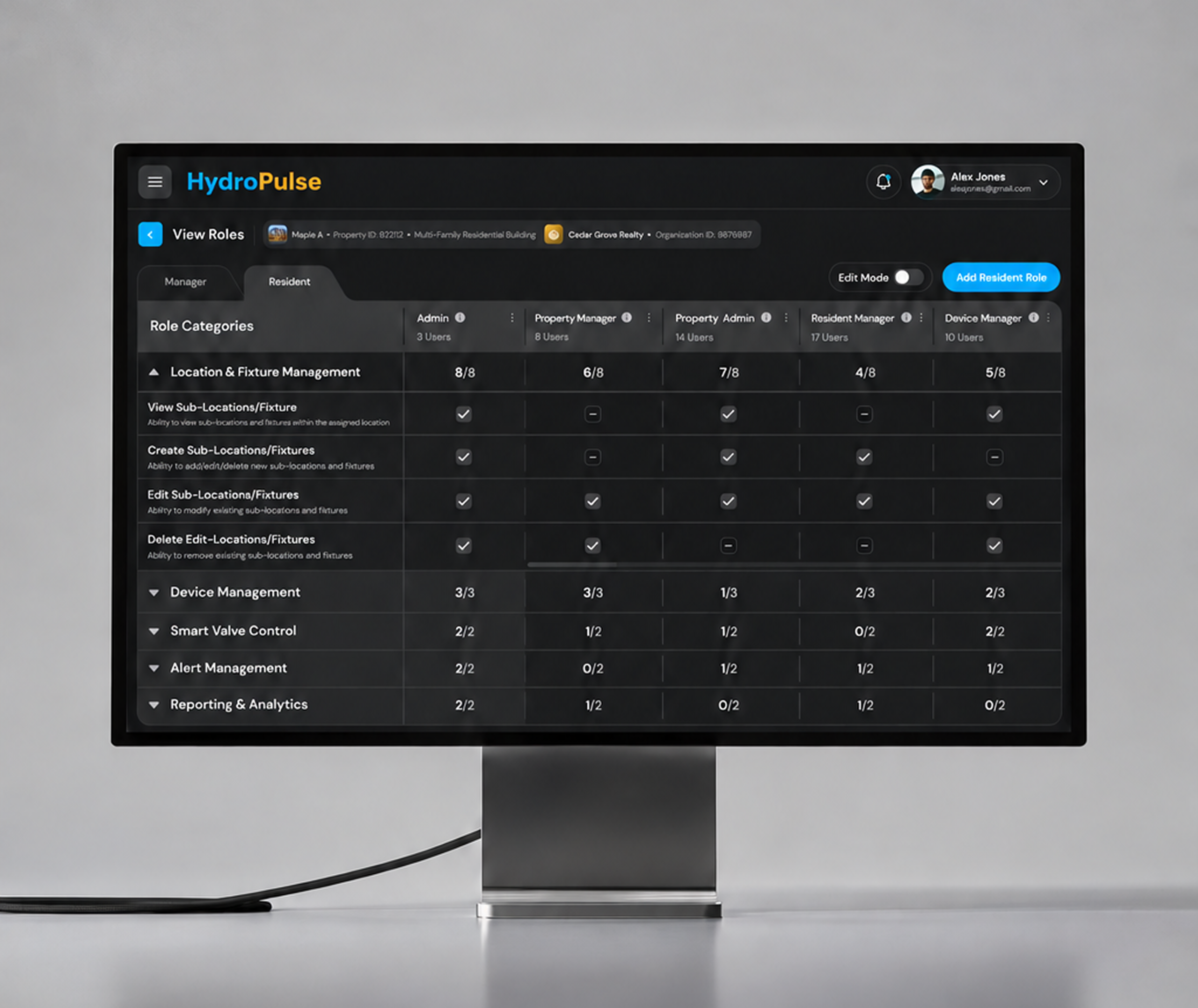
WebMobTech implemented hierarchical Role-Based Access Control with module-level, action-level, property-level, and location-level permissions. This ensures residents, property teams, organization administrators, and other users can access only the dashboards, devices, alerts, reports, inventory actions, and valve controls they are authorized to use.

The Challenge

Tracking Devices Throughout Their Lifecycle

The client needed a centralized way to manage devices from onboarding and registration to installation, transfers, maintenance, and returns while maintaining accurate inventory records and device histories.

Our Solution

WebMobTech created a centralized device lifecycle and inventory system covering bulk onboarding, approvals, transfers, device states, TTN registration, fixture assignment, installation, maintenance, returns, and audit tracking. TTN provisioning occurs when devices move into active property use, reducing unnecessary registrations.

The Challenge

Preventing Alert Overload While Maintaining Visibility

The client needed to ensure that users received relevant water and device alerts based on their assigned locations and notification preferences while avoiding unnecessary notifications during maintenance activities.

Our Solution

WebMobTech designed location-aware alert distribution so users only see alerts relevant to their authorized locations. Users can independently manage push, SMS, and email preferences, while maintenance mode suppresses unnecessary notifications during servicing without removing or losing recorded device events.

The Challenge

Configuring Similar Properties Without Repetitive Manual Work

Configuring multiple buildings, floors, and units with similar layouts involved repetitive manual work, increasing setup time and the risk of naming conflicts or configuration errors.

Our Solution

WebMobTech developed a guided property layout duplication workflow supporting selective scope, sequential naming, manual naming, CSV-based naming, destination selection, conflict validation, and detailed review before creation. This significantly reduces repetitive configuration when setting up similar units, floors, buildings, or property layouts.

The Challenge

Supporting Reliable On-Site Installation

Technicians needed a reliable mobile workflow to validate device assignments, check device health, test smart valves, document installation issues, and track progress without relying on disconnected tools or manual coordination.

Our Solution

WebMobTech designed a mobile installation workflow with QR scanning, assignment validation, device health checks, smart valve testing, photo capture, issue reporting, maintenance mode, and installation progress tracking, helping technicians complete device setup and validation without relying on separate spreadsheets or manual coordination.

Features Implemented

Key Features & Functionality

  • Key Features & Functionality
  • Key Features & Functionality
  • Key Features & Functionality
  1. Multi-Tenant Organization & Property Management

    Enables multiple organizations and properties to manage their own users, devices, layouts, alerts, and operational settings within one securely separated platform.

  2. Flexible Property Layout Management

    Supports customizable property hierarchies including buildings, towers, wings, floors, units, rooms, and fixtures to accurately represent different residential and commercial structures.

  3. Centralized Device Inventory & Lifecycle

    Tracks devices across manufacturers, central inventory, customers, properties, warehouses, and installations while supporting transfers, assignments, returns, maintenance, and complete lifecycle visibility.

  4. Bulk Device Onboarding & Approval

    Allows devices to be onboarded individually or through CSV, validates device and TTN information, and provides an approval workflow before devices enter operational inventory.

  5. TTN, LoRaWAN & IoT Device Monitoring

    Integrates with The Things Network and LoRaWAN to process data from smart valves, water meters, leak sensors, toilet sensors, gateways, and environmental sensors.

  6. Device-to-Fixture Assignment

    Connects approved IoT devices to specific property fixtures and locations, ensuring sensor readings, alerts, device history, and control actions maintain accurate physical context.

  7. Smart Valve Control

    Allows authorized users to remotely open or close individual or grouped smart valves while viewing command progress, current valve state, actuation history, and related alerts.

  8. Real-Time Alerts & Notifications

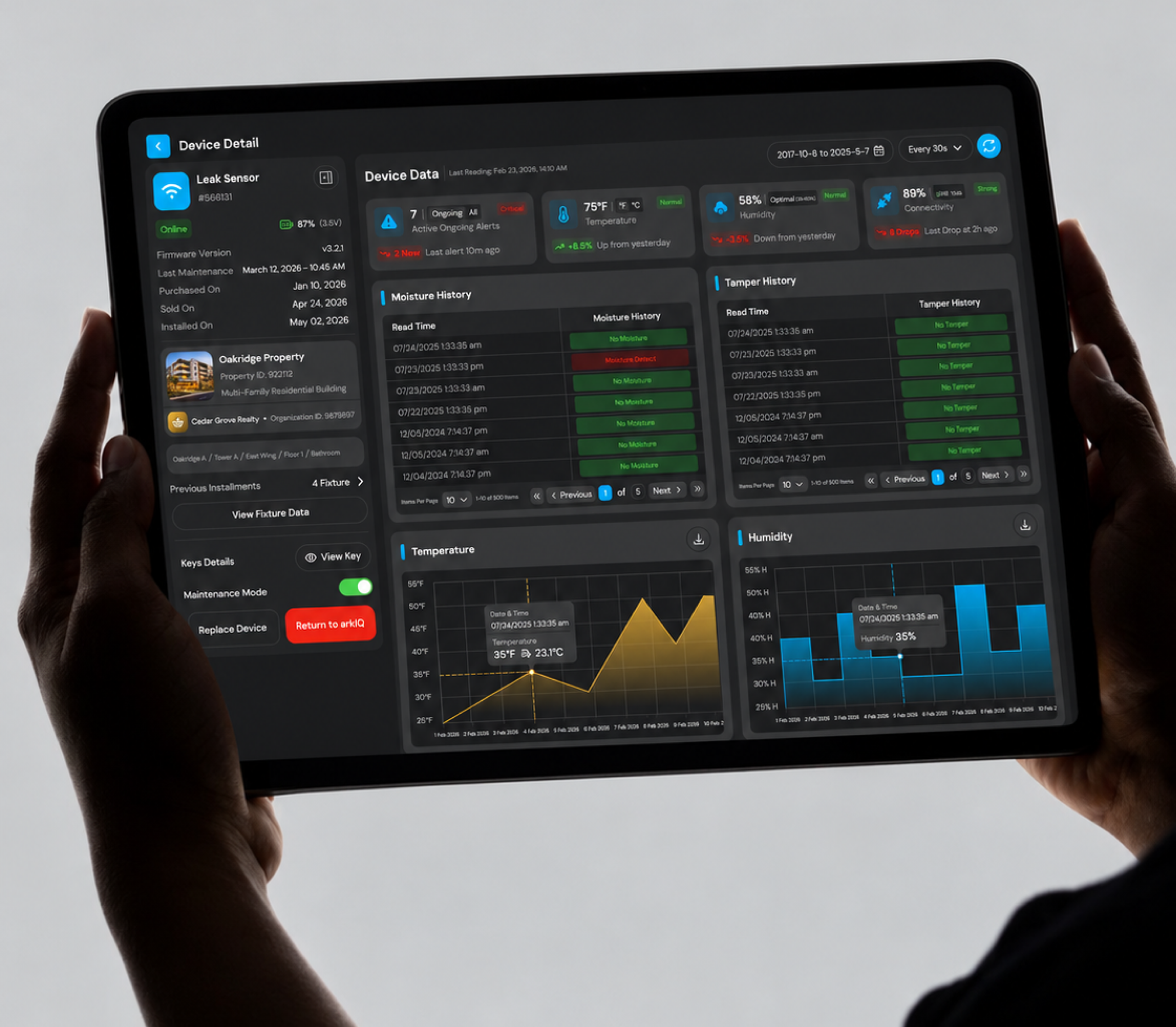
    Provides location-aware alerts for leakage, water flow, temperature, humidity, battery, offline devices, and gateway connectivity, with configurable push, SMS, and email preferences.

  9. Role-Based Dashboards & Analytics

    Delivers dashboards and reports based on user role and property scope, covering devices, alerts, water usage, gateway availability, operational performance, and other key metrics.

  10. Granular Roles & Access Control

    Controls access at module, action, property, and location levels so administrators, property teams, technicians, and residents only access authorized information and operations.

  11. Technician Installation Workflow

    Supports QR-based device assignment, eligibility checks, health validation, smart valve testing, issue reporting, maintenance mode, and installation progress tracking for field technicians.

  12. Resident Mobile Application

    Provides residents with unit-specific device monitoring, sensor readings, alerts, notification preferences, device history, and permitted smart valve controls through a secure mobile experience.

Our Tech Stack

The Right Tools for Every Challenge

HydroPulse is built on a scalable IoT and cloud architecture combining modern web technologies, real-time device communication, serverless processing, mobile applications, and AWS infrastructure to support property management, water monitoring, alerts, smart valve control, and connected device operations.

ReactJS
Android
iOS
The Result

Results That Strengthen Property Operations

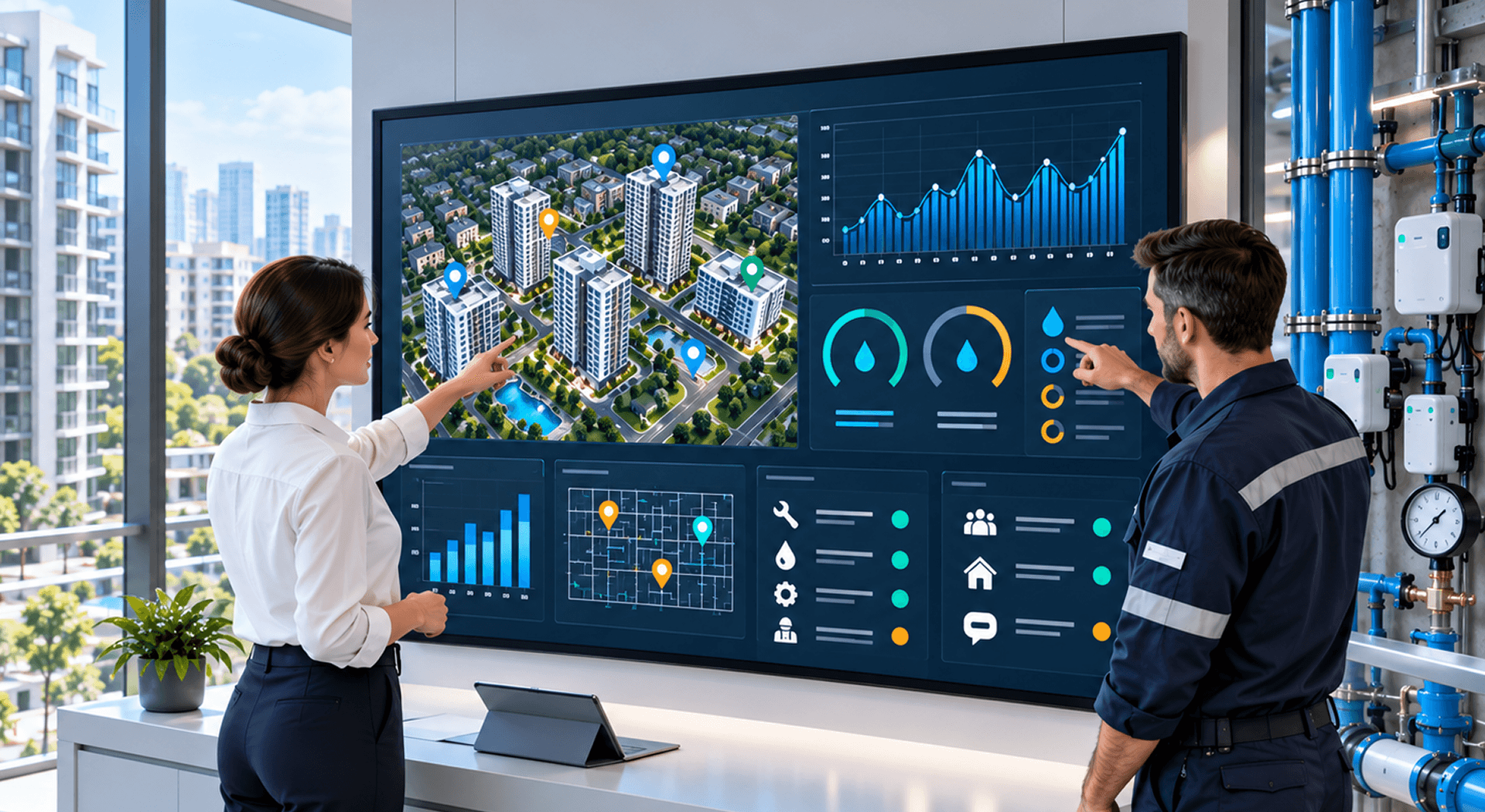
HydroPulse unifies IoT-powered property management, water monitoring, device lifecycle operations, alerts, and smart valve control. It provides real-time visibility and streamlines installations, maintenance, and operational workflows across residential and commercial properties.

  • Property Management

    Before
    Property structures and device locations were difficult to manage consistently across different building layouts
    After
    Flexible multi-level property hierarchies support buildings, towers, floors, units, rooms, fixtures, and custom locations
  • Device Lifecycle

    Before
    Device onboarding, transfers, installation, and tracking could require fragmented processes
    After
    Centralized inventory manages onboarding, approvals, transfers, fixture assignment, installation, maintenance, returns, and device history
  • IoT Monitoring

    Before
    Limited centralized visibility into multiple connected device types
    After
    Real-time monitoring supports smart valves, water meters, leak sensors, toilet sensors, gateways, temperature sensors, and humidity sensors
  • Alerts & Notifications

    Before
    Device events could create excessive or poorly targeted notifications
    After
    Location-aware alerts, configurable thresholds, maintenance mode, and push, SMS, email, and in-app preferences improve alert management
  • Smart Valve Operations

    Before
    Valve monitoring and control required separate or manual operational workflows
    After
    Authorized users can remotely monitor and control individual or grouped smart valves through web and mobile applications
  • Installation Workflow

    Before
    Technicians could rely on manual coordination and disconnected installation records
    After
    QR scanning, device validation, health checks, valve testing, issue reporting, and installation tracking create a structured field workflow
  • Access Control

    Before
    Managing different access requirements across organizations, properties, and residents was complex
    After
    Granular role-, property-, location-, module-, and action-level permissions provide controlled access across the platform
  • Operational Visibility

    Before
    Device, water usage, alert, and property information could be distributed across different processes
    After
    Role-based dashboards, reports, audit logs, and analytics provide centralized operational visibility and historical trackin
From Discovery to Production

A Structured Path From Idea to Launch

  1. Discovery & Strategy

    Understood the business goals, user needs, existing workflows, and technical requirements.

    Discovery & Strategy
  2. Solution Architecture

    Defined the system architecture, technology stack, integrations, and data flow required for the solution.

    Solution Architecture
  3. Development & Integration

    Built the core platform in agile sprints, integrating APIs, backend services, frontend experiences.

    Development & Integration
  4. Testing & Optimization

    Validated functionality, performance, security, and usability before preparing the solution for production.

    Testing & Optimization
  5. Deployment & Rollout

    Launched the solution, monitored performance, resolved initial issues, and ensured a smooth transition to production.

    Deployment & Rollout
Use Cases

Benefits of a Unified Water Management Platform

HydroPulse centralizes property operations, IoT device management, water monitoring, alerts, and resident engagement, helping organizations improve visibility, reduce manual work, respond faster to issues, and manage connected properties more efficiently.

  • Centralized Property & Device Operations

    Organizations can manage properties, layouts, devices, users, alerts, inventories, and operational workflows from one unified platform.

  • Faster Device Onboarding & Installation

    Bulk CSV onboarding, QR-based assignment, device validation, and guided installation workflows reduce repetitive setup effort and simplify field operations.

  • Smarter Water Monitoring & Response

    Real-time sensor data, configurable alerts, and smart valve controls help teams identify water-related issues quickly and take action from web or mobile applications.

  • Better Control Across Users & Locations

    Granular role-, property-, and location-based permissions ensure residents, technicians, and management teams only access the devices, alerts, reports, and controls relevant to them.

Conclusion

HydroPulse brings property management, water intelligence, IoT operations, device lifecycle management, and resident engagement into one connected platform. By combining flexible property hierarchies, real-time device monitoring, smart valve control, location-aware alerts, technician workflows, granular access control, and centralized reporting, the platform replaces fragmented processes with a more structured and scalable operating model. Its multi-tenant architecture provides a strong foundation for expanding across additional properties, device categories, analytics capabilities, automated workflows, and broader smart-building use cases.

We've a lot more to showcase here, around 700+ projects.

FAQs

Frequently Asked Questions

Questions about building smart water and IoT property management platform

Your Success, Our Commitment

Empowering businesses with innovative technology, uncompromising quality, and customer-first solutions.

Pramesh Jain

Founder & CEO

A smart water management system helps property owners, managers, and residents monitor water usage, detect leaks, track device health, and manage water-related alerts across multiple properties from one centralized platform.

It connects sensors, valves, meters, and gateways to provide real-time visibility into leaks, abnormal water usage, device status, and connectivity issues. This helps teams respond faster and reduce manual inspection efforts.

Yes. The platform is designed to support multiple organizations, properties, towers, floors, units, rooms, fixtures, and devices, making it suitable for both single-property and multi-property operations.

The system can generate alerts for leakage, low battery, offline devices, gateway issues, temperature, humidity, water flow, and other configured conditions. Alerts can be viewed, acknowledged, snoozed, or resolved based on user permissions.

Yes. Authorized users can open or close smart valves through the web or mobile application. The system also supports status tracking, command history, and location-based access control to ensure users only manage permitted devices.

The platform supports device inventory, QR-based scanning, fixture assignment, device health checks, maintenance mode, and installation tracking. This makes it easier for technicians and property teams to manage devices accurately during setup and servicing.