Empower TC

Transaction Management Software

Talk to the Team
Deliverables
Web Application Development
Industry
Real Estate
Duration
3 Months
Country
United States
Empower TC
Overview

Business Goals & Project Overview

Business Goals

Empower TC operated a complex real estate transaction business that struggled with fragmented workflows and manual administrative overhead. They required a robust, web-based management platform to automate end-to-end transactional processes across multiple states. Their primary goal was to consolidate disparate legal, compliance, and task-based operations into a single, scalable system that would significantly reduce manual data entry and improve operational efficiency.

Project Overview

WebMob Technologies delivered a comprehensive, custom-built transaction management platform designed to centralize the client's entire real estate workflow. By engineering a highly responsive, multi-module architecture, we enabled the client to manage complex legal, compliance, and property data without the friction of page redirection. This solution provides a unified environment for transaction coordinators, brokers, and agents to track progress, automate documentation, and maintain visibility across multiple US states.

Challenges & Solutions

Challenges Faced and Conquered

The client faced significant operational friction due to the sheer volume of data and complex relationships inherent in managing real estate transactions within a single digital interface.

The Challenge

Complex Layout Design

The client struggled to present extensive transaction data without forcing users to switch between multiple pages, which hindered productivity and slowed down the processing of high-volume real estate files.

Our Solution

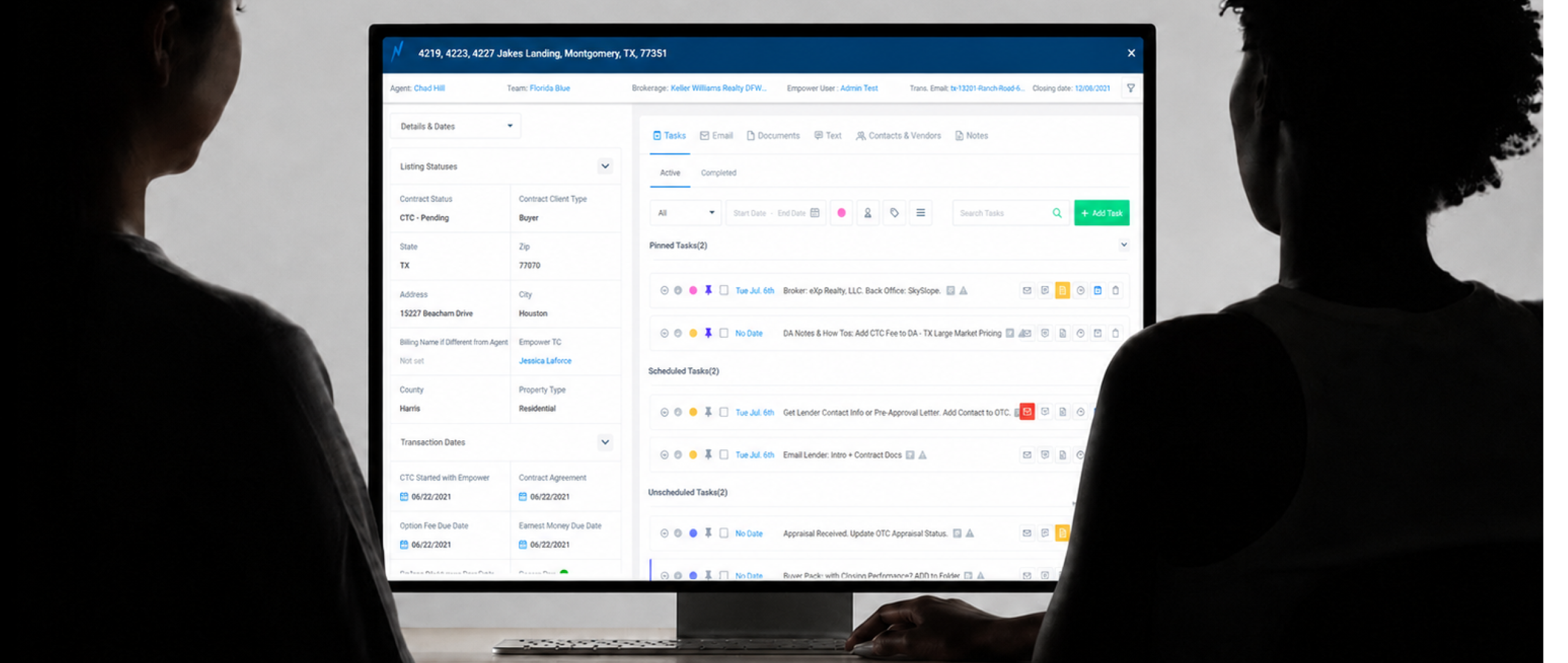
We engineered a responsive multi-module design using over 300 smart components. This allowed the client to manage complex data relations on a single screen, ensuring a seamless and intuitive user experience.

The Challenge

Systemic Data Overload

Managing thousands of data fields and module relations created a bottleneck, making it difficult for the client to maintain a clear overview of transaction statuses and critical compliance requirements.

Our Solution

We implemented a modular architecture that allows for correlative data management. This enables the client to organize information logically, ensuring that critical transaction data remains accessible and actionable.

The Challenge

Development Feasibility

The client faced difficulty in prioritizing system components, leading to a fragmented development roadmap that could not keep pace with the evolving needs of their real estate transaction business.

Our Solution

We established a clear component hierarchy and development framework. This allowed the client to build out features systematically, ensuring that each new module was both technically feasible and commercially valuable.

Features Implemented

Key Features & Functionality

  • Key Features & Functionality
  • Key Features & Functionality
  • Key Features & Functionality
  1. Transaction Dashboard

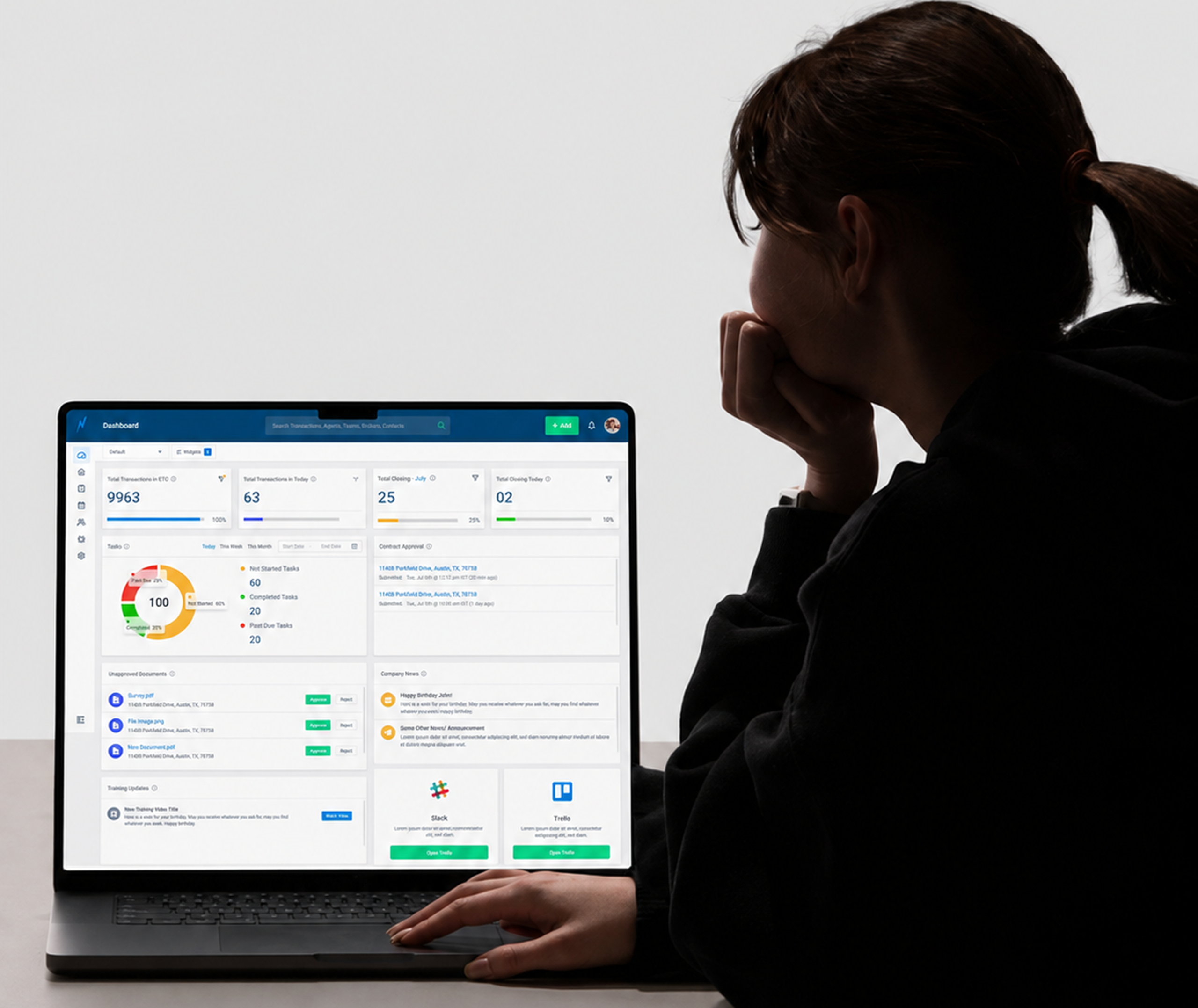
    WebMob engineered a centralized hub for tracking active and pending transactions. This enables the client to monitor property details and manage tasks through highly customizable, filterable data segments.

  2. Task Pipeline

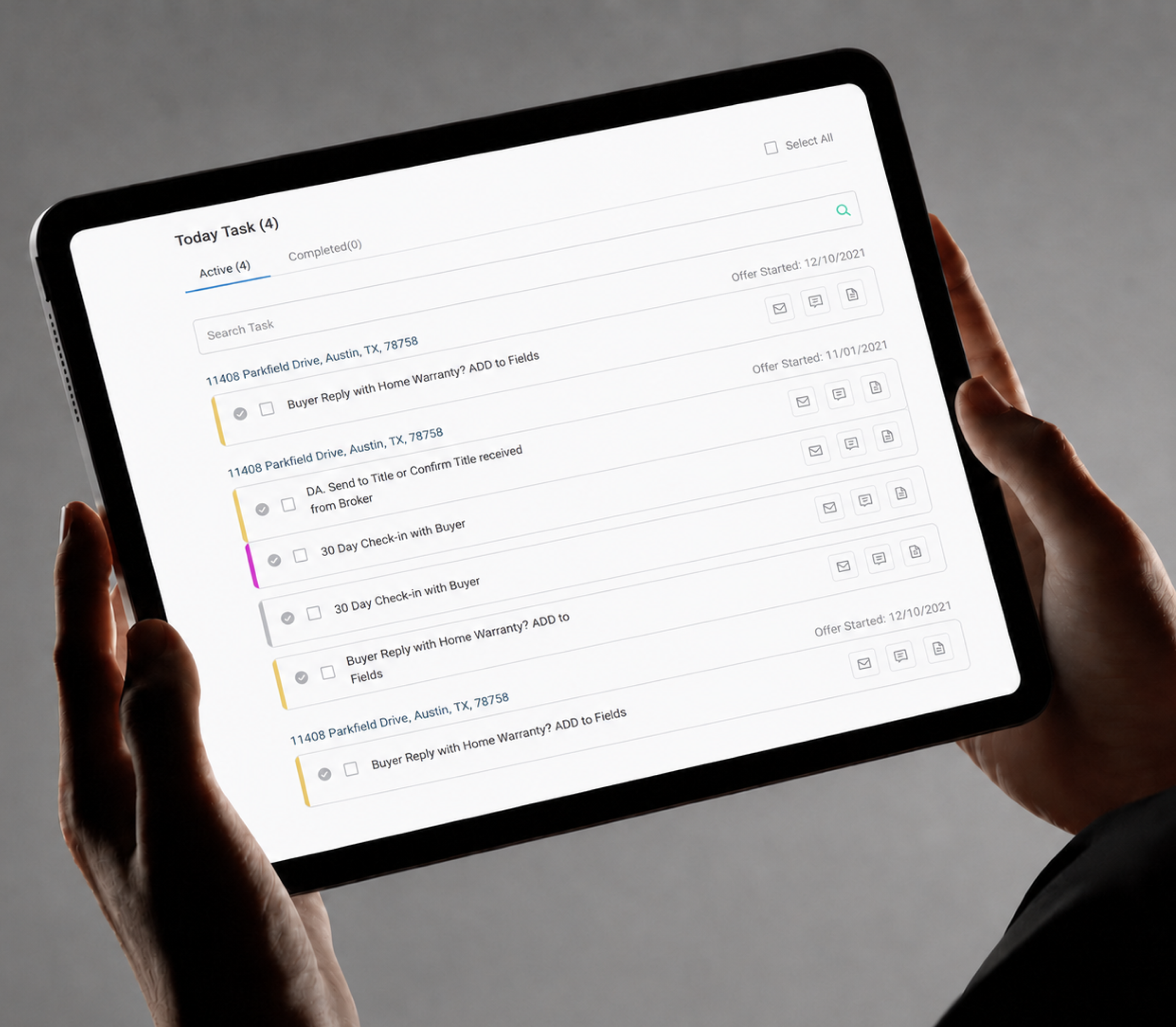
    We built a systematic tracker that allows the client to group, color-code, and chain tasks. This enables precise management of milestones and ensures seamless synchronization with external calendar tools.

  3. Customized Calendar

    This module provides the client with a flexible view of critical dates across multiple transactions. It enables users to apply custom filters and permissions for improved team-wide visibility.

  4. Agent/ Team/ Broker Accounts

    We developed a robust account management system for tracking business volume. This enables the client to impersonate accounts and perform quick actions to support their network of real estate professionals.

  5. Client Portal

    The portal provides a secure interface for buyers and sellers to view transaction progress. It enables the client to control visibility while facilitating direct communication regarding documents and tasks.

  6. Dashboard

    WebMob integrated role-based widgets and graphical tracking into the main interface. This enables the client to access real-time performance metrics and manage property contracts with greater operational oversight.

  7. Empower Users

    We engineered a comprehensive permission system for defining global and role-based responsibilities. This enables the client to maintain strict security while monitoring performance across all internal team accounts.

  8. Dynamic Setup

    This feature manages complex data relations through predefined templates for emails and documents. It enables the client to automate repetitive workflows and ensure consistency across all transaction types.

  9. Property Templates

    We built a flexible template system that links property types to specific state requirements. This enables the client to stack multiple templates, significantly reducing the time spent on manual setup.

  10. Task Template

    These reusable templates allow the client to define recurring tasks based on property type. It enables automated communication triggers, ensuring that stakeholders are updated immediately upon task completion.

  11. Document Template

    We developed a system to manage up to 100 documents per transaction. This enables the client to track status, organize folders, and automate the distribution of files via integrated email.

  12. Date Template

    This tool defines critical date sets contingent on transaction milestones. It enables the client to auto-populate schedules, ensuring that deadlines are met consistently across every new property listing.

  13. Transaction Progress Report

    WebMob created a reporting engine for scheduling daily and monthly performance summaries. This enables the client to track team progress and document uploads through fully customizable, automated data layouts.

  14. Field Editor

    The editor allows the client to create custom fields for unique transaction requirements. It enables the generation of dynamic merge fields for use in automated email and text templates.

  15. Service and Packages

    We built a subscription management module for defining services and costs. This enables the client to offer varied pricing packages based on state-specific requirements and business service levels.

The Result

Fragmented Real Estate Workflows Rebuilt as One Connected System

The platform transformed the client's operations by replacing manual, error-prone processes with a unified, automated ecosystem that scales alongside their growing transaction volume.

  • Workflow Management

    Before
    Manual tracking across disparate systems.
    After
    Automated, end-to-end task pipelines.
  • Data Accessibility

    Before
    Fragmented data requiring page redirects.
    After
    Unified dashboard with real-time visibility.
  • Operational Scalability

    Before
    Limited by manual administrative overhead.
    After
    Dynamic templates for rapid state expansion.
From Discovery to Production

Discovery to Production

  1. Discovery & Strategy

    Understood the business goals, user needs, existing workflows, and technical requirements.

    Discovery & Strategy
  2. Solution Architecture

    Defined the system architecture, technology stack, integrations, and data flow required for the solution.

    Solution Architecture
  3. Development & Integration

    Built the core platform in agile sprints, integrating APIs, backend services, frontend experiences.

    Development & Integration
  4. Deployment & Rollout

    Launched the solution, monitored performance, resolved initial issues, and ensured a smooth transition to production.

    Deployment & Rollout
  5. Testing & Optimization

    Validated functionality, performance, security, and usability before preparing the solution for production.

    Testing & Optimization
Use Cases

The Business Case

By centralizing complex transactional data, we delivered a scalable foundation that allows the client to increase transaction volume without increasing administrative headcount.

  • Operational Efficiency

    Automated task and document workflows significantly reduce the time spent on manual data entry.

  • Scalable Architecture

    Dynamic templates allow the client to expand into new regions and states with minimal configuration.

  • Enhanced Compliance

    Centralized tracking and role-based permissions ensure all transactions meet strict legal standards.

  • Improved Visibility

    Real-time reporting and dashboards provide clear insights into team performance and transaction status.

Conclusion

Empower TC is a comprehensive real estate transaction management platform built to automate end-to-end property transaction workflows across multiple US states. With 300+ screens covering task management, document handling, calendar integration, and client portals, the system simplifies the daily operations of transaction coordinators, agents, brokers, and teams.

We've a lot more to showcase here, around 700+ projects.

FAQ

Frequently Asked Questions

Your Success, Our Commitment

Empowering businesses with innovative technology, uncompromising quality, and customer-first solutions.

Pramesh Jain

Founder & CEO

We prioritize modular architecture and responsive design to ensure that large datasets remain accessible without overwhelming the user, focusing on logical data grouping and intuitive navigation.

Yes, we specialize in building custom software that integrates seamlessly with existing tools like Slack, Trello, and various CRM systems to ensure a unified operational environment.

Timelines vary based on complexity, but we focus on an agile delivery model that allows for rapid prototyping and iterative development to meet specific business milestones within months.

We build with a modular, template-driven approach that allows you to add new features, regions, or user roles without requiring a complete system overhaul as your business scales.

We implement granular, role-based permission systems that allow admins to define specific access levels, ensuring data security and operational control across all team members and clients.